What to do about fun
Depending on your organisation's general reaction to the concept, you'll get a pretty good idea of what kind of dominant culture rules supreme.


'Fun' is a recurring theme on this site.
We think about fun often, probably because it's tricky to know what to do about it.
We're all very well aware that in the presence of having fun, people display an enormous capacity for staying power, creativity and positivity.
If there is fun to be had, most will be incredibly motivated to be a part of that fun. Some will even contribute to the continuation of the party with their energy and time.
But then when it comes to getting energy out of the same people in the work environment, all of a sudden the idea of tapping into fun to enhance productivity levels...is taboo. You will have noticed that most management experts don't exactly pride themselves on having an in-depth understanding of fun.
Money making and fun, apparently, do not mix well.
But why?
If fun is so powerful and useful why is it not something that isn't welcome in the hallways of Old Mutual?
Instead of fun, HR experts turn to timesheets, KPIs, return to work mandates as the go-to tools to inspire workers to produce good work. Largely though, the result of this type of system design is stress, anxiety, burnout, pointless meetings and declining levels of productivity.
And yet, nobody questions the system. Everyone just follows the same rules, while expecting a different result.
Why?
We've facilitated more than a few strategy workshops where the topic of fun has come up.
The talking point is often one that ignites some interesting debate and most of that discussion revolves around the lack of a clear and consistent definition of the word.
For some, fun is a frivolous, misdirected enjoyment of something pleasurable that doesn't produce any kind of useful outcome other than the subjective experience of fun itself.
For others, fun is seen as the enjoyable exploration of their field of interest where that investigation goes beyond the known edges of its recognised boundaries. Having this kind of fun for them is the subjective motivation they need to immerse themselves in uncertainty, free of any negative consequences should their adventure into the unknown yield limited commercial value.
These are clearly responses from individuals with two different worldviews.
Through the eyes of efficient operators, where things need to work like a clock...fun is a disruptive negative force that must be avoided.
But in the eyes of innovators, fun is the required condition under which new discoveries are made.
Fun is a critical catalyst for innovation. In its absence, what's produced daily is just more of the same.
Depending on your organisation's general reaction to the concept, you'll get a pretty good idea of what kind of dominant culture rules supreme.
You may also then get a better appreciation for why change within the organisation is such a difficult thing to achieve.
Unfortunately however, fun is a concept that remains poorly defined and woefully misunderstood, and in many cases because of this, is not leveraged strategically within organisations that really need it to break out of the lacklustre growth path they find themselves stuck in.
More:
 Jon Cherry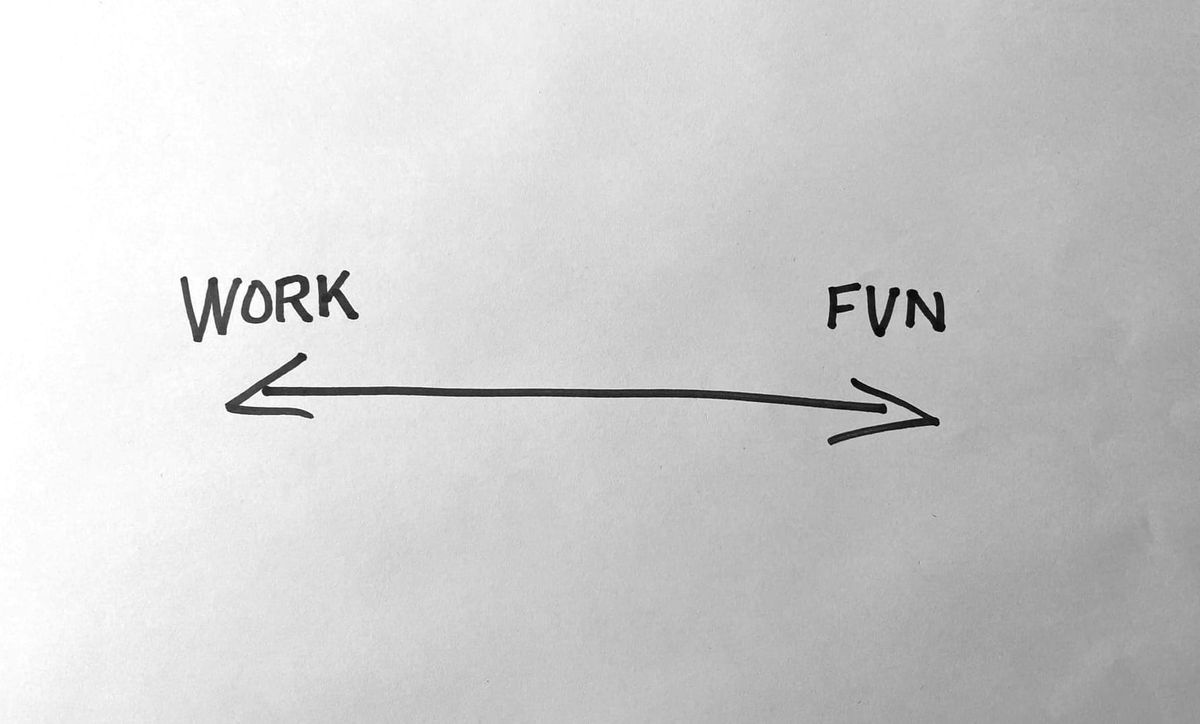
 Jon Cherry