Copyright laws are not alone in restricting South Africa's creative economy
WIPO says we're crazy not to be taking advantage of our abundant talent.

You don't need to spend long in South Africa before you are presented with the brutal realisation that South Africans are some of the world's most gifted human beings.
And the potential of South Africa's creative economy isn't just a drum we love to bang on. The Director General of the World Intellectual Property Organisation (WIPO), Daren Tang, was in Pretoria this week and made particular mention of South Africa's global competitive advantage in its creative outputs.
If we know that SA's creative output is a treasure trove begging for better exporting, WIPO knows that SA's creative output is an under-utilised national resource...and lots of other suspect that SA's creative output is something that's possibly not being leveraged enough...then what the hell is the problem?
Copyright laws
Yes, part of the issue is the decade-long fight to get the Copyright Amendment Bill and Performers’ Protection Amendment Bill written into law. Without the appropriate legal infrastructure to protect the value of intellectual property, the right mechanism to commercialise value doesn't exist.
And while the WIPO are in town.. and free cucumber sandwiches are to be munched on...government officials predictably say all of the right things, but there is no escaping the awkward reality that the much-needed legislation still hasn't been written into law.
But...laws are not enough.
Education
In the same way that easy access to smooth roads didn't turn Lewis Hamilton into a F1 World Champion, good legal infrastructure is not enough to turn a young person with raw talent into a successful intellectual entrepreneur.
Our education system is not sophisticated enough to equip South Africans with the right skills to leverage their talents in productive ways.
To enable a thriving sub-economy that operates thanks to the trade of creative value you need to create the conditions under which intellectual property professionals can be churned out en masse.
This isn't just about building dance academies and design schools. Competence needs to include business, legal, management, accounting and marketing skills.
Route-to-market
Apart from the intellectual infrastructure to enable export, the state also needs to provide a route-to-market for the industry. Entrepreneurs require customers who are eager to pay reasonable prices for creative products, something that individual value creators can't easily do alone. Trade shows, distribution networks, funding; all need to exist if entrepreneurs are to succeed. Again, government can play a vital role, but need to demonstrate an eagerness to facilitate this.
Cultural change
All this talk about the 'creative economy' makes a hellava lot of sense in the hallowed hallways of Stellenbosch Business School, but the term itself is abstract, includes a wildly-incoherent basket of disciplines and carries almost zero professional-aspiration within the broader South African society.
Significant work needs to be done to frame the opportunity accessibly and eliminate the obscurity with which we still wrestle with the idea.
These are some of the obvious hurdles, besides delayed copyright laws, that stand in the way of viable progress.
The opportunity is real. But realising it requires more than fixing copyright law: it requires deliberately building the legal, educational, commercial and cultural conditions that will allow South African creative talent to become protected, marketable and exportable value.
More:
 Sipho Kekana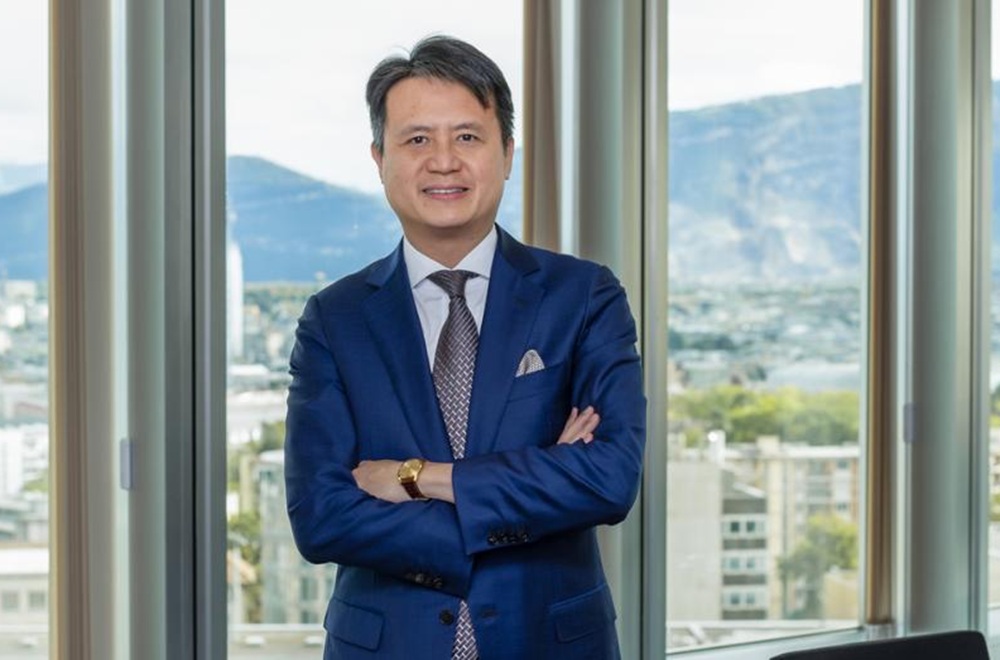
Meanwhile - the Presidents of France and South Korea recently hosted a summit focussing on pretty much the same thing: