
Behaviour is a function of environment
Why we act quietly in libraries and shout loudly at music festivals.

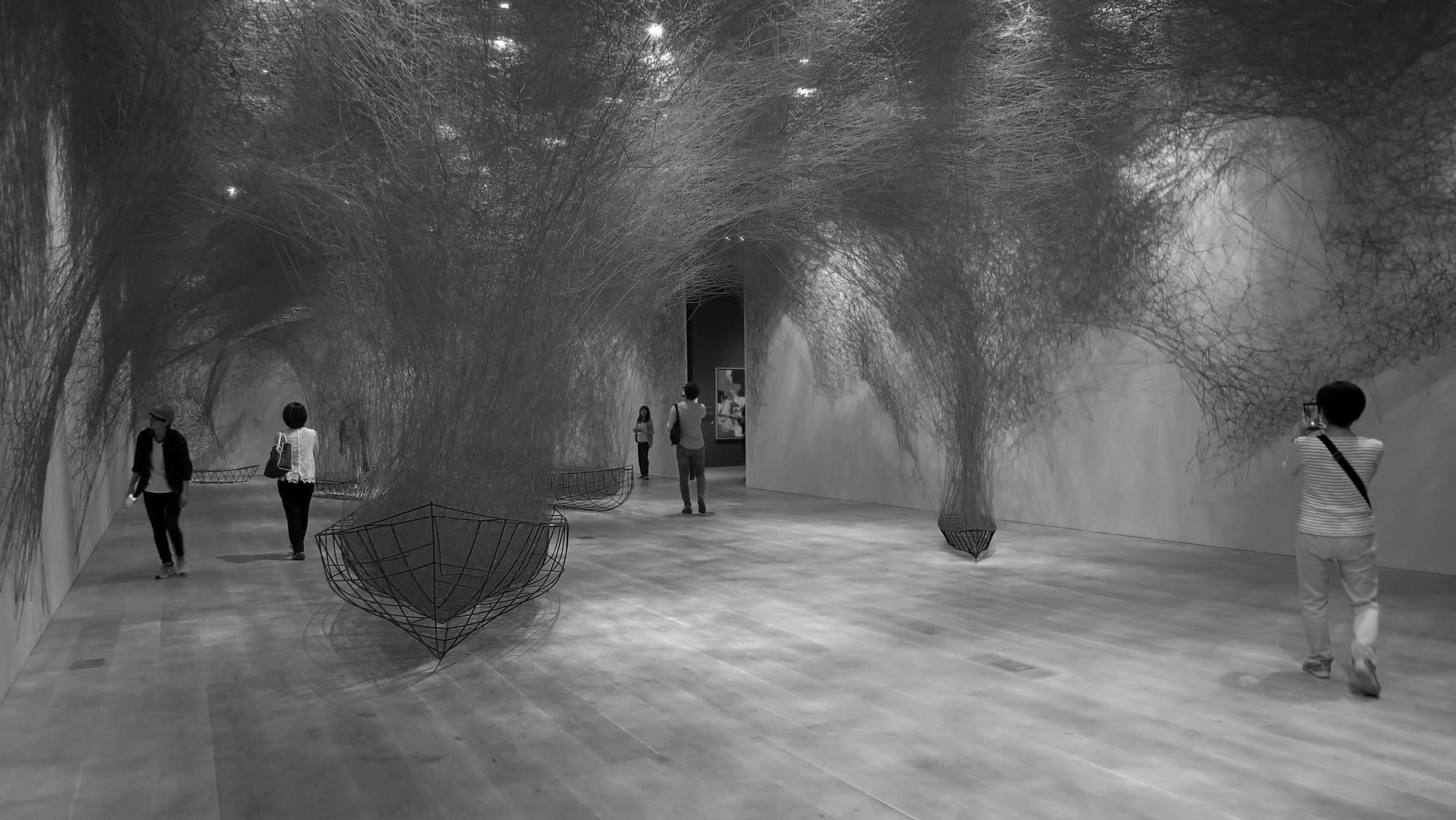
We feel compelled to whisper while standing in the cavernous expanse of a church.
We try to be quiet while browsing through books in a library.
At a music festival you need to speak loudly if you want somebody else to be able to hear what you are saying and moving your feet in rhythm with the music is advised if you don't want other people to think you hate their favourite DJ.
Behaviour is often something that emerges in direct response to environmental conditions.
The person being quiet in a library is not necessarily 'a quiet person'; quietness is not who they are, rather than a temporary behavioural consequence of being in a place where quietness is appropriate.
The same logic applies to innovation.
Innovative output is created thanks largely to people being in an environment that enables innovative behaviour. It emerges easily when people find themselves under conditions where they are encouraged to create novel solutions; an open playing field guided by flexible guardrails, obviously works better than a strict linear rulebook where failure is discouraged.
Thinking shift / behavioural shift
Almost predictably, the greatest challenge 'strategy work' (created as a result of an inspirational workshop) must overcome is usually implementation. A shift in thinking doesn't always translate into a sustainable change in organisational behaviour.
And that's because the new thinking injected into the same old environmental conditions as before will not produce the envisaged new behaviour.
For an upgraded mental paradigm (a new strategic direction) to be successfully implemented and affect organisational behaviour, appropriate enabling conditions need to be created that support the cultural emergence of the envisaged response.
If more innovation is what's needed to produce the desired future in mind, then surround those that need to be innovative with an innovation-enabling environment to achieve success.
Then stand back and see what new behaviour happens.